
Top Signs You Need Garage Door Service – Don’t Ignore These
A garage door that hesitates for half a second before it moves isn’t being slow. It’s telling you the opener motor is covering for friction your springs should be handling, and that compensation has a lifespan measured in weeks, not months. Most serious garage door failures announce themselves first through sound, movement and visible wear. Learning to read those signals is the difference between booking a scheduled tune-up and paying for an emergency repair. If you’d rather not crawl around the door yourself, call (833) 762-3210 and we’ll take a look.
Key Takeaways
- Five distinct sounds (grinding, popping, squealing, rattling, banging) each point to a different failed component and a different urgency level.
- A twice-yearly manual balance test tells you more about spring health than any visual check.
- Front Range temperature swings stress springs and seals in ways that show up in October, even when summer felt fine.
- Some signs let you schedule a visit. A few mean stop using the door immediately.
What Are the Five Sounds That Mean You Need Garage Door Service?
Each sound you hear from a moving garage door maps to a specific part, and the type of noise tells you how urgent the problem is. Grinding points to worn rollers or a dry hinge. A sharp pop near the top of the door often means a spring is about to fail. Squealing usually means metal-on-metal friction in the track or hinges. Rattling suggests loose hardware. A heavy bang when the door reaches the bottom is the opener’s travel limit or a failing spring.
Here’s how the five sounds break down in order of what we’d worry about most:
- Popping or snapping near the springs. A torsion spring making a popping sound is under immense tension and can shear without much warning. This is the one to treat as a stop-and-call. Springs are the highest-risk component on the whole door, and we don’t recommend touching them yourself.
- Grinding during travel. Worn nylon or steel rollers grinding against the track, or a hinge that has run dry. Fixable, but ignore it and the friction starts wearing your opener motor.
- Squealing. Metal rubbing metal in the track, hinges or rollers. Often the easiest fix, and often the sign people wait longest to act on.
- Rattling or clanking. Loose bolts, brackets or track fasteners. Worth tightening, and a good reason to book a scheduled visit before something works its way loose.
- A loud bang when the door lands. Either the opener’s down-limit is set wrong, or the spring isn’t holding the weight it should. Both put strain on the opener and the panels.
One shortcut we’ll offer: if you know the brand on your door, tell us when you call. We work on Clopay, Amarr, Wayne Dalton and Craftsman along with the other major lines, and knowing the brand upfront helps a technician arrive ready instead of guessing.
The Manual Balance Test Every Highlands Ranch Homeowner Should Do Twice a Year
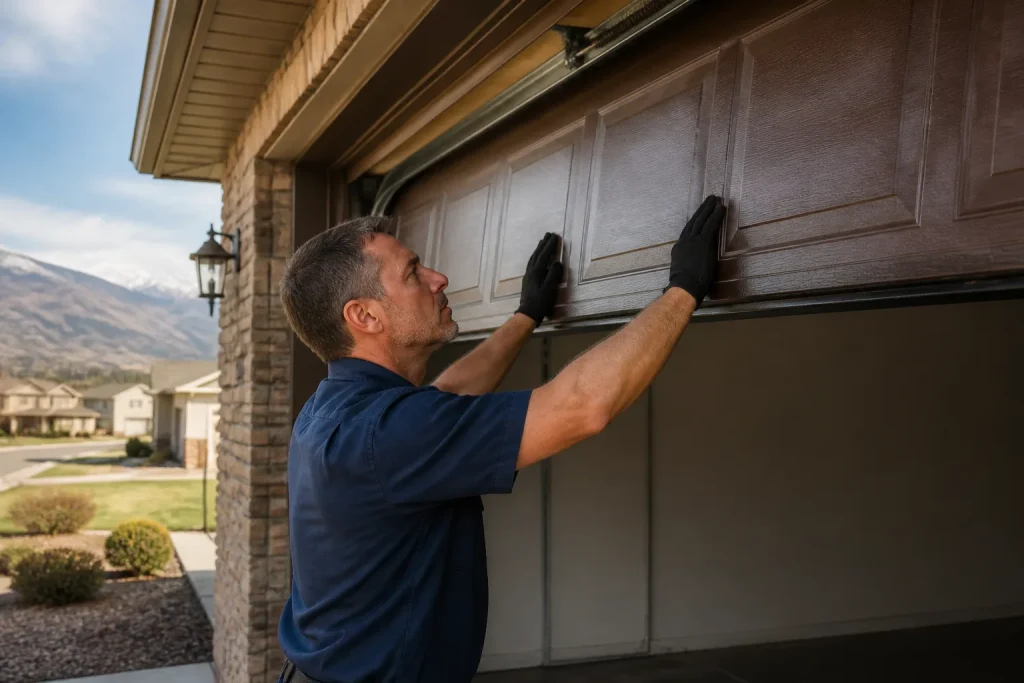
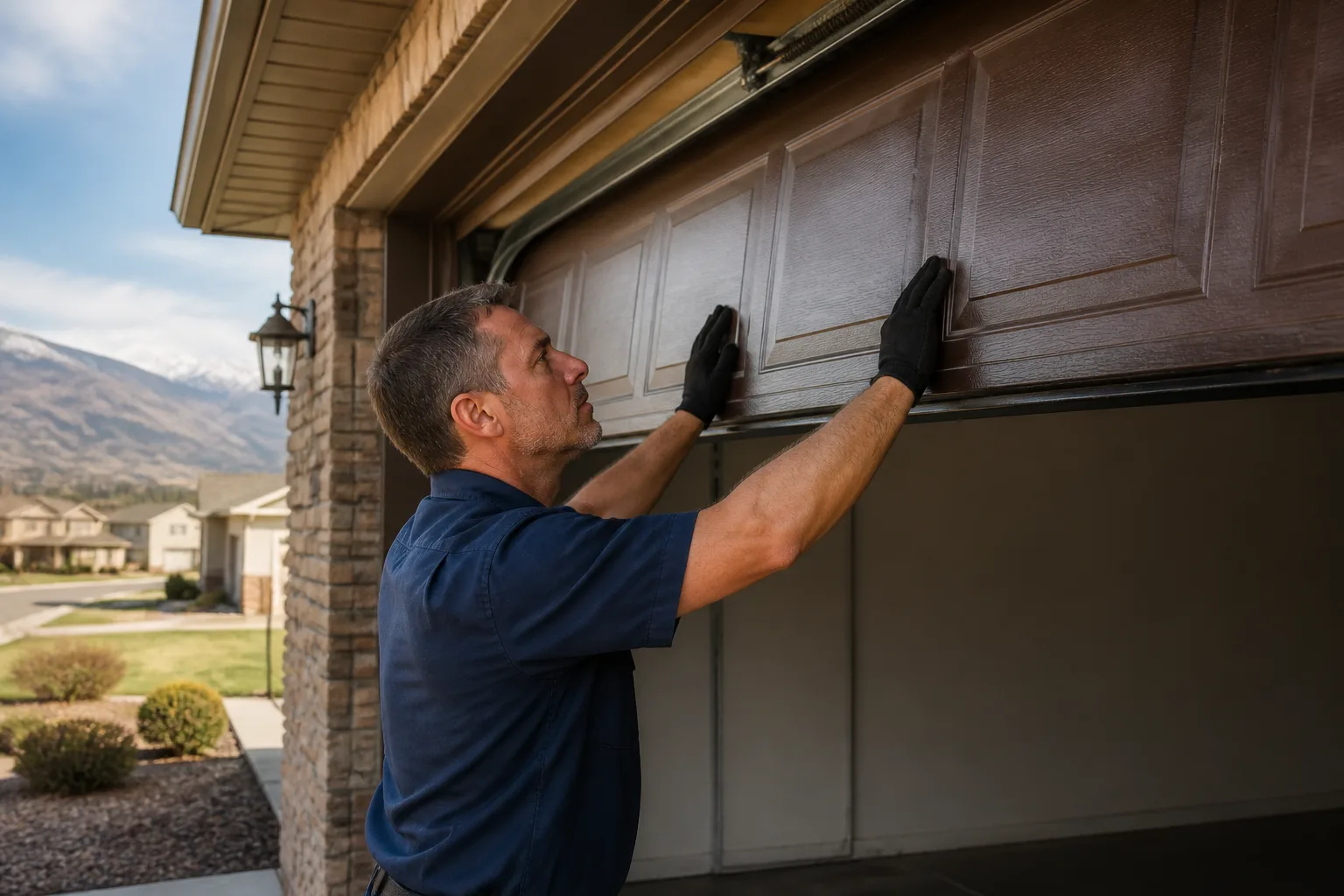
The balance test tells you whether your springs are still carrying the door’s weight. You do it with the door closed, the opener disengaged, and your hands only. No tools, no climbing. It’s the single most useful check a Highlands Ranch homeowner can run, and it takes about two minutes.
Here’s how to do it safely and what the results mean:
- Disengage the opener. Pull the release handle so the door moves by hand only. That’s the red cord hanging from the rail.
- Lift the door to about waist height, then let go. Stand clear and watch.
- Normal result: the door holds roughly where you left it, or drifts only slightly. Springs are balancing the door correctly.
- Problem result: the door drops fast or shoots up on its own. That means the springs are no longer matched to the door’s weight. Call today. Don’t run the opener again until it’s checked.
Do the test in spring and again in fall. In Highlands Ranch, the fall test matters more than people expect. A door that balances cleanly in July can drift noticeably by October once the temperature drops, because cold makes springs stiffer and seals less flexible. Catching that drift early is the difference between a small adjustment and a snapped spring.
Visual Checks You Can Do From a Safe Distance
You don’t need to put your hands anywhere near a spring or cable to spot trouble. Stand back and look at four things: the cables, the springs, the rollers and the tracks. A trained eye reads wear patterns in seconds, but a homeowner can catch most of the serious stuff from six feet away.
- Cables. Look for fraying, kinks or a cable that’s come off its drum. A frayed cable is a failing cable. If you see strands separating, stop using the door and have it looked at. Cables carry the same load as springs and snap without ceremony.
- Springs. A torsion spring should be a continuous coil. A visible gap in the coil means the spring has broken. If you can look up and see daylight through the middle of a spring, that’s a broken spring and the door should stay down.
- Rollers. Flat spots, cracks or a roller that’s wobbling in its bracket. Worn rollers are one of the most common causes of grinding and uneven travel.
- Tracks. Dents, bends or a track that’s pulled away from the wall. A bent track will drag the door and eat rollers fast.
If you spot any of these, the useful thing isn’t to fix it, it’s to describe it accurately when you call. “The bottom cable on the left is frayed” gets you further than “the door seems weird.” For anything involving cables or springs, leave it to a technician. Those parts hold the door’s entire weight under tension, and a mistake there is a serious injury waiting to happen.
Why a Door That Works in Summer Can Show Failure Signs in October
Front Range temperature swings create their own stress pattern, and October is when a lot of doors start talking. The temperature can swing sharply between afternoon and overnight in Highlands Ranch, and every cycle makes springs expand and contract. Springs that were near the end of their life in summer often cross the line as the first real cold arrives. The metal gets stiffer, the lubricant thickens, and the door suddenly needs more force to move than it did in July.
The weatherstripping and bottom seal tell the same story. Cold makes the seal rigid, so it drags on the threshold and adds friction the opener has to overcome. You’ll notice the door hesitating at the bottom or the opener working harder to close. That added resistance accelerates wear on the motor and the springs at the same time.
October is also when homeowners switch from using the front door to the garage as the main entry, which puts more cycles on the door right when the mechanical parts are least forgiving. If the door sounds different than it did last month, that’s not your imagination. The door is telling you it’s time for a look. Booking a scheduled visit in Highlands Ranch before the cold settles in beats an emergency call when it doesn’t. If you’ve noticed the door fighting you, our garage door repair team can locate the source of the strain and get ahead of it.
Scheduled Visit vs. Stop Using the Door: Which Signs Go Where?
Some warning signs let you plan. Others mean the door shouldn’t move again until a technician has seen it. The dividing line is whether a high-tension component is involved and whether the door is still under control. If the answer to either is no, stop.
Book a scheduled visit when you notice:
- Squealing, rattling or minor grinding
- Worn rollers or a slightly noisy track
- An opener that’s slower or louder than it used to be
- Door drifting slowly during the balance test
Stop using the door and call when you notice:
- A visible gap in a spring coil, or a bang followed by a door that won’t lift
- A frayed or detached cable
- The door dropping fast or shooting up during the balance test
- A door that’s come off one track or is hanging unevenly
The second list is about safety, not convenience. A garage door weighs a lot and runs on springs held under tension. If a spring or cable has failed, operating the door pushes that load onto the opener and the panels, and the whole assembly can come down wrong. That’s the point to stop and call a professional.
When to Call a Pro
Here’s where we’re honest about the lines. Checking the balance twice a year, listening for changes and looking over the cables and springs from a distance are all things a careful homeowner can do. Replacing a spring, re-cabling a door or resetting a bent track are not. Those are the jobs where a trained technician matters most, and it’s why spring repair is a specialty of ours rather than a sideshow.
We’ve also seen a lot of doors where the opener gets blamed for a problem that’s actually in the springs, the cables or the rollers. When a door hesitates, the opener is the part doing extra work, not the part that failed. Getting to the real cause is the whole job, which is why we ask about brand – a LiftMaster opener, a Genie unit and a Craftsman model all have different diagnostics, and the door itself being Clopay, Amarr or Wayne Dalton matters too. Our garage door opener repair covers that diagnosis side, and our garage door spring repair handles the part everyone’s afraid to touch.
If a spring has snapped or a cable has let go, that’s not a “next week” job. We answer 24/7, and we run emergency service as part of how we operate, not as an add-on. Fast dispatch from 7am to 7pm, Sunday through Friday.
The Bottom Line
Garage door problems almost always show up as mechanical signals before they become failures. Grinding, popping, squealing and rattling each point to a different component, a twice-yearly balance test tells you how your springs are really doing, and a quick visual scan of cables, springs, rollers and tracks catches most of the serious stuff early. In Highlands Ranch, the fall temperature swing is the moment to pay closest attention, because that’s when a summer-fine door starts to show its age. Catch the signs early and you’re looking at a scheduled visit instead of an emergency repair.
If you’re in Highlands Ranch and need help, Highlands Ranch Garage Door Repair Pros offers free estimates. Our technicians have up to 10 years of experience, and we work on the brand already in your garage. Call (833) 762-3210. We answer 24/7. Fast dispatch from 7am to 7pm, Sunday through Friday.
Related services in Highlands Ranch: Highlands Ranch Garage Door Repair Pros.
Frequently Asked Questions
The clearest signs are a change in sound, a door that hesitates before moving, and a failed balance test. If you hear grinding, squealing or popping, or the door drops or rises on its own when you test it by hand at waist height, it needs service. A quick visual scan of the cables and springs confirms it. Call (833) 762-3210 for a free estimate.
Yes. With the door closed, disengage the opener and lift the door to about waist height, then let go. If it holds roughly in place, the springs are balancing it. If it drops fast or shoots up, the springs aren’t matched to the door’s weight anymore, and you should stop using the door and call. Call (833) 762-3210 to book a look.
Cold makes springs stiffer and seals less flexible, so the door needs more force to move than it did in summer. Front Range temperature swings push springs that were already near the end of their life into failure, and October is when a lot of doors start talking. A scheduled visit in Highlands Ranch before the cold settles in is the smart move. Call (833) 762-3210 for an estimate.
A sharp pop near the springs followed by a door that won’t lift, or a loud bang when the door lands. Combined with a visible gap in a spring coil or a frayed cable, that’s the point to stop operating the door and call a professional. Springs and cables hold the door’s full weight and shouldn’t be handled without training. Call (833) 762-3210.
Written by the team at Highlands Ranch Garage Door Repair Pros.
Need Garage Door Help?
Call Highlands Ranch Garage Door Repair Pros - the local pro we connect you with is licensed and insured, here with fast help in Highlands Ranch.
(833) 762-3210